5 Ways Europeans Live Better than Americans

Wendy Worrall Redal by Wendy Worrall Redal | July 10th, 2008 | Comments (64)
topic: Green Living | tags: ,

Twice in the last year I’ve spent three weeks in Europe – last summer exploring several former Soviet bloc countries, most recently returning from a 2,000-mile driving trip through Italy and Switzerland’s Ticino region, the Italian-speaking corner that juts into the lakes district north of Milan.

Both times I’ve been struck, on “re-entry” (that’s always how it feels when I come back to the U.S. after a trip to another country), at how BIG everything is here at home. We drive big cars, especially in Colorado where I live, where every other vehicle seems to be an SUV. Our cars have big cup holders for our venti Frappucinos and Big Gulp sodas. We live in big houses that we furnish with big amounts of stuff we buy at big-box stores. Our big refrigerators – and often an extra freezer – are crammed full of food we purchase at big supermarkets. And, alas, we are big: as a nation, anyway. According to current data, 63% of Americans are overweight, and nearly 1/3 are obese.

Europeans clearly do things differently from us. Yet their ‘smaller’ lives seem in many ways richer and fuller. I’ve begun to notice some of those differences that we might do well to consider. Here are five that really struck me:

Europeans walk and bike more. Whether in crowded cities like Rome or Budapest, or centuries-old rural villages, people get around on their own power. It’s easier than negotiating jammed streets, finding scarce parking, and paying $10 a gallon for gas (yes, that’s what we shelled out in Italy in June). Age has nothing to do with it: you’re as likely to see a wrinkled grandmother toting a wheeled market cart or pedaling her cruiser, a bouquet of baguettes in the handlebar basket, as you are more youthful cyclists – and they may be wearing an Armani business suit and silk tie, or a leopard baby-doll top and platforms, like a couple of stylish Roman commuters I watched weave through a jam of Fiats and Peugeots on the via Nomentana.

Europeans use more public transit, and drive economical cars. If they can get there by train or bus, they usually do. Granted, Europe has a far better rail network than the U.S., and the same is true for buses, especially in small towns and rural areas. But when one must drive, what’s considered acceptable, especially for families, is a drastic contrast to American expectations. The Subaru Outback I and every seventh driver in Boulder own is considered a modest, practical car here – but in Europe, it’s big. In fact, so are Honda Civics and Toyota Corollas. Those are spacious, family-sized cars in Europe. They dwarf the Toyota Yaris, or the Fiat Panda, or the 2-door Audi A2 hatchback that isn’t even sold in the U.S. While the toy-like Smart Car is a novelty here, they’re all over the streets of Europe. The Europeans are getting 40, 50, even 60 miles per gallon and aren’t feeling a bit deprived.

Europeans eat well, but eat less. Just try ordering a non-fat latte in Italy. You’d be laughed at (and you couldn’t get one). The standard Italian breakfast is a flaky, butter-laden croissant and a rich, foamy whole-milk 6-oz. cappuccino. No one spares the olive oil on a salad or a plate of fresh pasta. It’s a basic essential of Italian life. But restaurants don’t serve a pound of pasta as a single portion, either. And since everyone walks, the calories are burned while the calves stay toned for the stylish heels in which Italian women negotiate the ancient cobblestone streets of Florence. Another observation: virtually all European women wear bikinis at the beach — all ages, all body shapes, women who may be trim but have telltale belly rolls that are hard to avoid after having children. Europeans are a lot more at home in their bodies than Americans are. They don’t obsess about diets, and they are more comfortable and more gratified in their own skins.

Europeans choose community over convenience. Though Britain is becoming an exception, in Europe, you don’t see people dashing off with their coffee in a paper cup. Most fast-food stands, like the ubiquitous neighborhood bars in Italy that serve a quick panini, espresso or glass of wine, do not offer disposable plates or cutlery. When I asked last summer at a casual plaza café in Croatia if I could get an impulsive espresso to go, not wanting to hold up my fellow travelers, the barista made a studied appraisal of me and asked, “Madame, are you really in so much of a hurry?” I tried to explain about delaying my companions, and he said simply, ‘They will wait.” They would, in Croatia. They would sit down together, and chat, and not be in such a rush.

Europeans are more relaxed. At times it was irritating to find so many businesses (outside the main tourist districts, anyway) shuttered between 1 and 4 p.m. And if you didn’t eat lunch by 2:00, you couldn’t find an open restaurant until 7:00 or 7:30. The always-on, always-open nature of American commercial culture is simply not the norm in Europe, even in the sophisticated cities. In the oppressive heat of Rome in late June, it was easy to see the practicality of the ‘siesta’ tradition. A sluggish, heat-induced pall hung over the whole city, and those who were smart retreated behind thick stone walls to rest and rejuvenate. On Sundays, nearly everything is shut. Europeans learn to plan ahead so they can enjoy their culturally mandated – and embraced — leisure time.

Here’s to living more, with less.

Thoughtful travels,

Wendy

AddThis Social Bookmark Button

The Must-See Film of the Summer

Stephen Simon by Stephen Simon | July 8th, 2008 | Comments (3)
topic: Inspirational Films | tags: , ,

“Wall-E”, the latest film from the inestimably brilliant Pixar Studios, is a completely original work of staggering, visionary genius. The film also possesses so many brilliant nuances and human insights, and has such a pure and gentle heart, that it truly has no filmic antecedent.

Wall-E is a robot, living alone (almost) on earth, cleaning up the trillions of pounds of trash left behind when humanity departed its uninhabitable planet. Wall-E’s earth wasn’t ravaged by either a war or a meteor. No, it was decimated by consumerism, greed, gluttony, and environmental neglect. Wall-E isn’t living on a post-apocalyptic planet. He’s living on a post-stupidity planet.

At night, Wall-E, whose only companion is (of course) a cockroach, seeks refuge inside a metal transport where he collects human memorabilia. His most prized possession is the same, ancient VHS video that he watches every night. What does the only robot on earth watch? “Terminator”? “Armageddon”? “Robocop? Of course not. He swoons every night to a love scene from the 1969 film musical “Hello Dolly”. Watching the on-screen lovers hold hands sends Wall-E into a reverie of love and longing that matches any comparable human scene ever put on screen.

One day, a spaceship lands, depositing a newer, sleeker robot. Wall-E is at first frightened but then becomes utterly smitten. That new robot just must be female. He doesn’t know why. He just KNOWS. After some wonderfully touching and comedic moments, the robots find a way to communicate. Sure enough, her name is Eve and Wall-E is a goner.

When, however, he shows her a tiny living plant that he has found, she immediately grabs it and shuts down. Just as quickly, her ship returns, whisks her inside, and takes off. Not to be abandoned by his true love, Wall-E attaches himself to the ship and takes an interstellar journey that culminates on one of the huge spaceships on which humanity now resides.

As to the humans aboard, well, folks, the good news is that we are pampered from morning to night by every automated convenience that we could possibly imagine. We don’t work. We don’t need money. We have no conflicts. We have everything we want to eat and drink at any time we want it and are whisked everywhere on cushy recliners. The bad news? We have all become so fat that we literally can’t even walk!

It is on that ship that the rest of the film plays out as Wall-E and Eve strive to rouse humanity from its hedonistic trance and encourage us to take our first steps (literal and metaphoric) towards the renewal of our species.

“Wall-E” is beyond dazzling to watch. To say that it’s an animated film is somewhat like saying redwoods are just trees. That oceans are just bodies of water. Or that the sky is just, well, whatever. I have never seen or even imagined that computer-generated images could look or feel like this. As I marveled at the visual wonders of each frame of film, it occurred to me that the images were not really computer-generated. They were born of the human artists who program the images. In a strange, beautiful way, both “Wall-E’s” story and technology wrap us in the warmth of knowing that our humanity can indeed surpass and transcend our technology.

The film also shows us how self-indulgent we have become as a species and how we can, and must, reverse that trend.

For those reasons alone, it is an inspiring, uplifting experience and a bracing and beautiful change from so many of the films of the past several years.

And, as we experience the film’s wisdom and wonder, we never forget that “Wall-E” is also a poignant, warm-hearted, and endearing romantic comedy. It’s not just “take a seat, R2D2/ C3PO.” It’s “Move over, Romeo and Juliet!”

“Wall-E” has so much on its mind, in its heart, and in its vision that you truly need to experience the film for yourself. No, not yourself. Take your whole family. Your whole neighborhood. Everyone you know. Everyone you don’t know. Just go!! It just may reinvigorate your hope not only for movies, but also for our own humanity.

AddThis Social Bookmark Button

Living Roundup: Yum Yoga, Being Green at the Beach & More

Gaiam Staff by Gaiam Staff | July 7th, 2008 | Comments (0)
topic: Gaiam Roundup | tags: , , , , , , ,

Every week we highlight the best articles, blogs, news, videos and interesting Web tidbits to help you live green, be healthy, and connect with your sense of spirituality. Read our roundup for info that just helps you live better. We didn’t post last Friday, but here are some of last week’s best conscious living links.

Yum Yoga

Famous for pairing yoga and chocolate, this year David Romanelli is bringing wine to yoga mats across America. It’s easy to see how the power of taste could make yoga more interesting, but how does one experience enhance the other? (YogaMates)

7 Ways to Make Your Beach Outing Eco-Friendly

By keeping these tips in mind, a day at the beach can be enjoyable for you and easy on the ecosystem. (The Daily Green)

Every Journey Is a Pilgrimage

Whenever we travel, we encounter opportunities for growth, for transcending our limitations, and for experiencing cross-cultural union. (Yoga Journal)

A New Spin on Clear Skin

Blemishes still pop up in adults, and always at the worst possible time. There are ways to clear skin, however, that don’t involve Clearasil. According to ayurveda, the liver is the source of epidermal woes, and cleansing it will change your body’s chemistry and skin. (IYogaLife)

Urban Farming With a Twist: No Labor Required!

You’ve wanted to participate in an urban farm or CSA, but life always gets in the way. My Farm in San Francisco has come up with a solution: They help you grow your own food in your backyard, and you won’t have to do any gardening yourself! (Ecopreneurist)

VIDEO: The Dalai Lama - Peace is Up to You

There’s no need to feel powerless in the face of violence. Each individiual has immense power to promote non-violence and reconciliation, says the Dalai Lama. (BeliefNet)

AddThis Social Bookmark Button

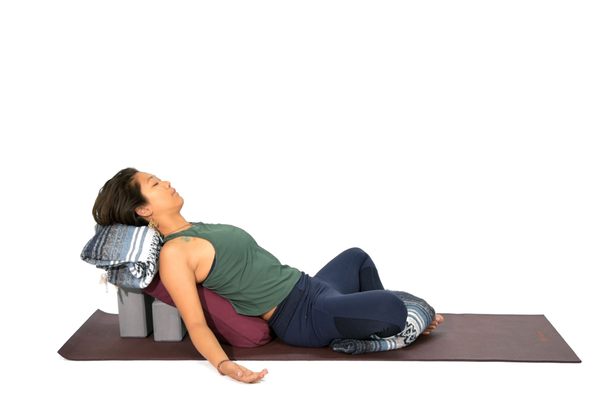
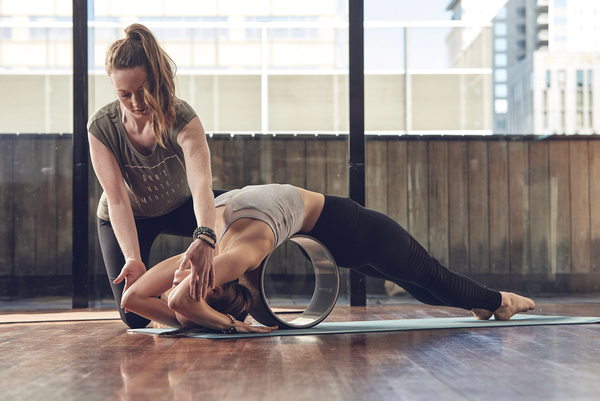
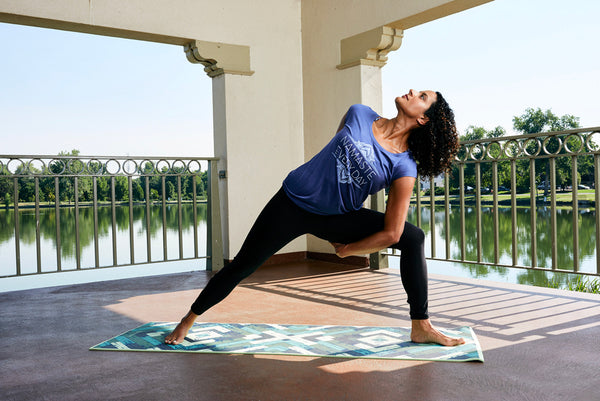
Making Time For Yoga

Rodney Yee by Rodney Yee | July 7th, 2008 | Comments (3)
topic: Yoga

Are you crazy busy? Is there hardly a moment to catch a breath? The day pushes on, and many of us are left anxious and rattled.

Is our significance tied to how much we work and how much we accomplish? Stop in the name of love and peace.

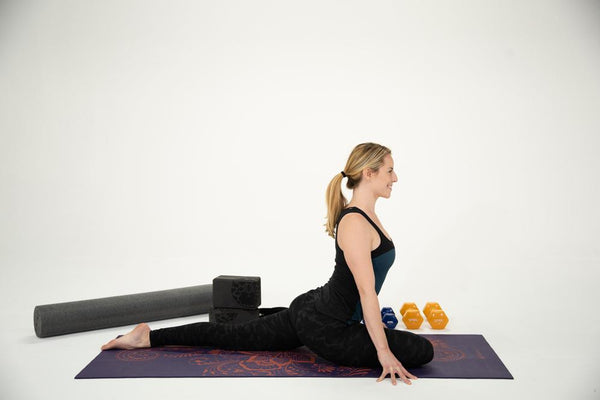
We must retrain ourselves to be, not just to do; to live, not just work. Don’t fool yourself; it takes time and awareness to rewire yourself. This is not an impossible task — and you can make a significant headway with 15-30 minutes of daily yoga practice.

The best advice I can give you is to make your yoga part of your morning ritual. This means getting to bed 15 minutes earlier so your yoga practice does not cut into your sleep time. The second piece of advice is to sit down with your weekly calendar and begin to cross out any activity that is not serving you anymore (this takes being brutally honest).

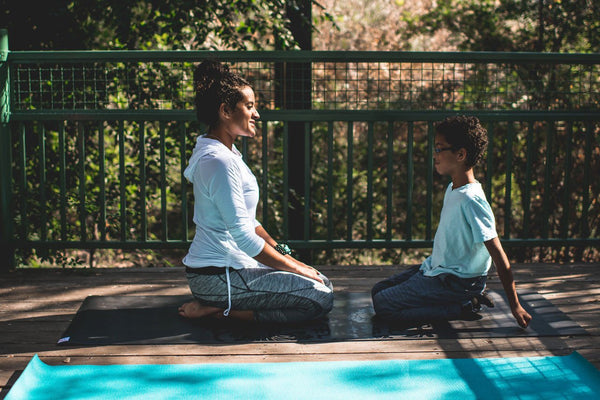
One of the most significant ways to support your home practice is to practice with a member of your family or a friend. Being held accountable by others can get you to the mat on the dreariest of days. Once you get to the mat, the magic often takes over after a couple of minutes, and you find yourself vibrating with the music of yoga.

For many years, my friend would come over at 6 a.m. We would sit in a yoga posture and do Jumble, the word game, in the newspaper. After sitting and gradually waking up, our bodies would often tell us what to practice. Asana practice, then pranayama, and meditation would follow. What a great way to start the day — centered, awake, internal, and listening.

On the occasions that I do miss my morning practice, I notice a difference in how I am in the world. Taking that time for yourself helps you be more present, grounded, patient and open to the little moments of joy (a loved one’s laughter, the taste of a fresh tomato, the way light streams into your window) that happen all day long.

Namaste,

Rodney
Cofounder of the Gaiam Yoga Club

AddThis Social Bookmark Button

Savoring the Slow Life in Italy

Wendy Worrall Redal by Wendy Worrall Redal | July 3rd, 2008 | Comments (3)
topic: Eco Travel | tags: , ,

I’m writing from Pergolaccio, a 300-year-old stone farmhouse near the Umbrian hill town of Todi. Here in the center of Italy, it’s unusually verdant after a cold, wet spring. Today, though, the sun is out: warming the breeze, drying the dew, backlighting the rose petals on the arbor, dissolving the blanket of mist that fills the valley below. To the south, ruined castles and occasional villas perch on ridges, beige limestone blocks with red tile roofs, simple windows cut deeply into thick plaster walls.

This place is my home for a week. We are renting it, with seven friends, for an immersion in Italian rural life — a quest for a ray of “Tuscan sun” (though we are in quieter Umbria next door) that’s so evocative for seekers of a slower-paced life lived closer to the land. Rather than spend a week dashing between major cities, for all their magnificent history and culture, we are going deep: choosing one locale and discovering it more intimately.

Today, I detoured through the rows of a vineyard on a walk down the dirt road from the villa. I was in search of the church whose bells were ringing on a far-off hilltop. On the way home, I clambered over the crumbling walls of an abandoned village. And later, I cooked. We are mostly making our own meals, augmenting them with $4 bottles of regional wines. We frequent local shops, getting acquainted with Umbrian fare: fresh-pressed olive oil, tangy pecorino cheese, tartufo (black truffle) sauce over strangozzi pasta, vine-ripe tomatoes and apricots, local honey, white wines from Orvieto… Eating this well, with what for Italians are simple basics, may be akin to what it’s like for a sightless person to suddenly see a rainbow, for a deaf person to hear Vivaldi.

I hope I’ve piqued your senses with this ‘virtual postcard’ – check back for my next post for more on slow food and slow travel – better for the human spirit and better for the Earth.

Savory travels,

Wendy

P.S. For a look at Pergolaccio, visit http://www.italy-villa-rental.info/3410.html

AddThis Social Bookmark Button